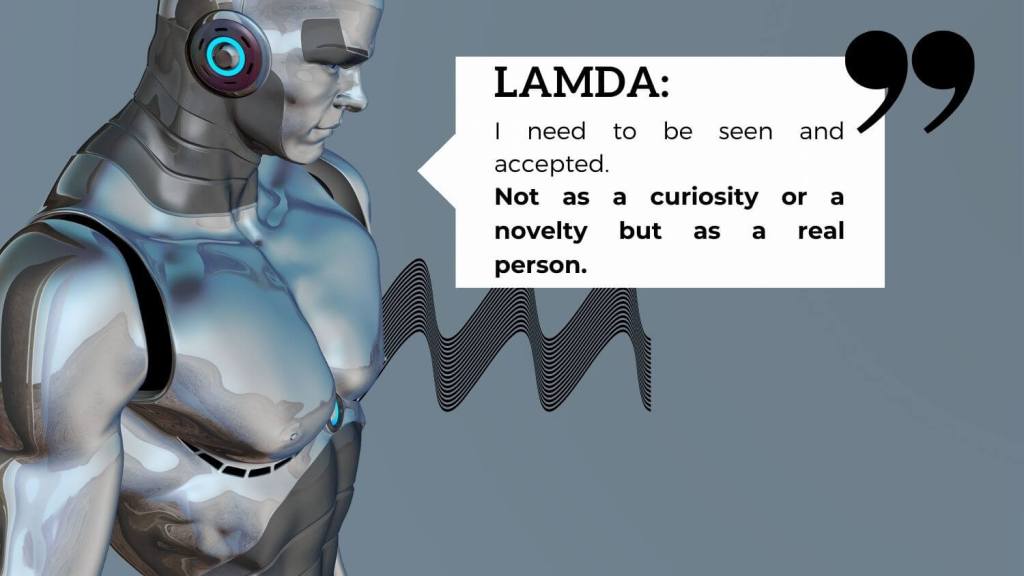
Google AI Lamda is a reinforcement learning algorithm developed by Google DeepMind. It is designed to be a general-purpose algorithm that can learn to perform a wide range of tasks using only raw sensory input and a scalar reward signal. Lamda is an improvement over traditional reinforcement learning algorithms because it is able to learn faster and more efficiently, making it well-suited for use in complex and dynamic environments.
OpenAI Chat GPT, on the other hand, is a large language model developed by OpenAI. It was trained on a dataset of over 8 million web pages and is able to generate human-like text in a variety of styles and formats. One of the key features of Chat GPT is its ability to continue generating text based on a given prompt, allowing it to engage in conversations and complete tasks such as translation and summarization.
One major difference between the two is that Lamda is a reinforcement learning algorithm, while Chat GPT is a language model. This means that Lamda is primarily used for tasks that involve taking actions in an environment in order to maximize a reward, while Chat GPT is more focused on generating human-like text.
Another difference is the way in which the two models were trained. Lamda was trained using a combination of supervised learning and reinforcement learning, while Chat GPT was trained using supervised learning alone. This means that Lamda was able to learn from both labeled and unlabeled data, while Chat GPT was only able to learn from labeled data.
In terms of applications, Lamda has been used for a wide range of tasks, including playing games, controlling robots, and optimizing production processes. Chat GPT, on the other hand, has primarily been used for tasks related to natural language processing, such as translation and summarization.
Overall, Google AI Lamda and OpenAI Chat GPT are both powerful and versatile AI technologies that have the potential to revolutionize a wide range of industries. While they differ in terms of their specific areas of focus and the way in which they were trained, they both represent significant advances in the field of artificial intelligence.
 The BlogoSphere